Parenting Tips & Routines
Morning Routine Checklist for School: 6 Steps for Busy Mornings
School mornings fall apart in the same place every time: the search. Shoes, bag, permission slip — hunted, not found. This checklist fixes mornings the night before and runs six steps in a fixed order: wake with a buffer, dress first, a breakfast anchor, teeth, the launch pad, and a calm two-minute exit. About 45 minutes door to door, and the child runs the list, not you.
Total scope: ~45 minutes · Ages 4-8 (preschool notes included) · 1 sheet of paper for the checklist + a launch-pad corner by the door.
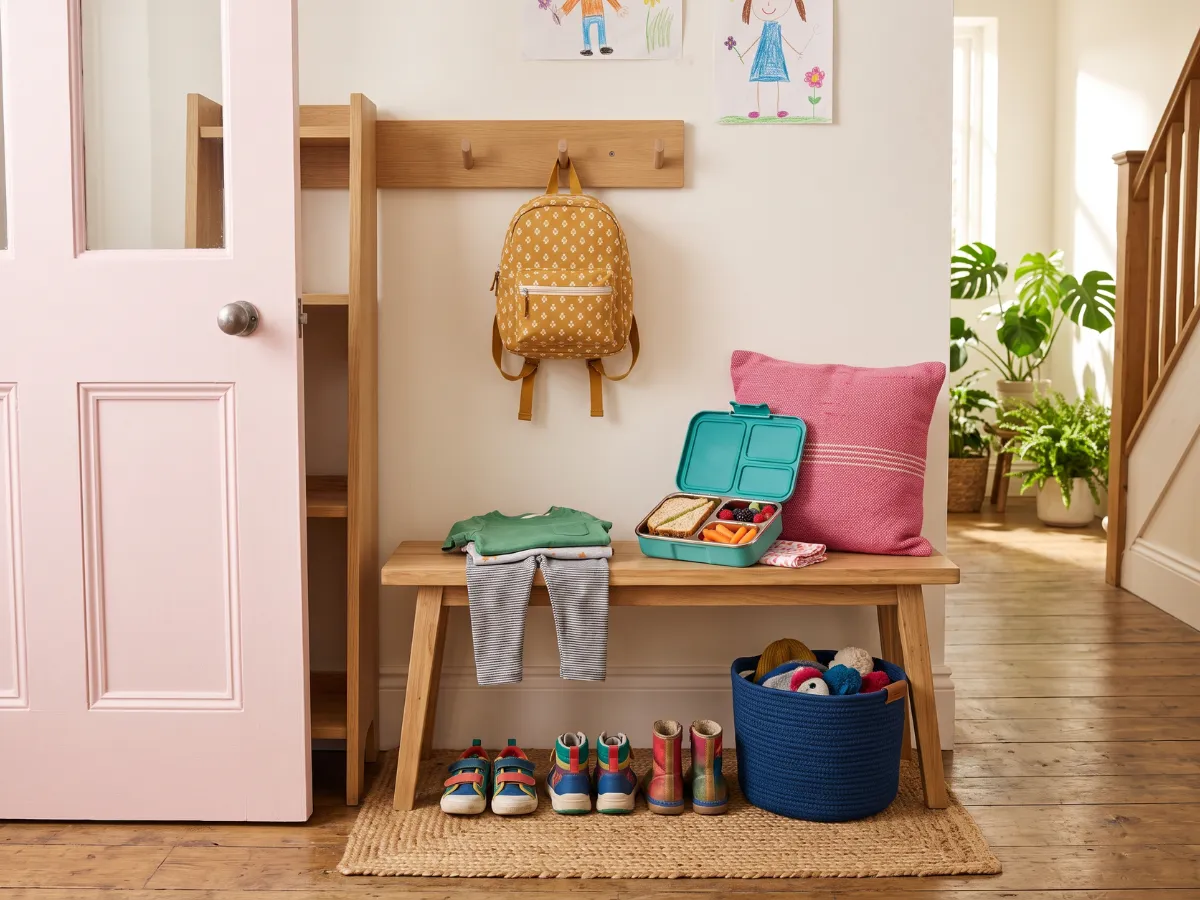
1. Wake with a 10-minute buffer, no screens
Wake ten minutes earlier than the math says you need — the buffer is the routine. Lamp on, curtains open, same wake-up phrase every day, and no screens until everyone is dressed. Screens before clothes are where mornings go to die; clothes first is the rule that saves all the others.
Age 4-8 · 10 minutes of margin · Alarm the child can hear; parent up first by 10 minutes.
2. Dress from last night's laid-out clothes
Clothes were chosen last night — that was bedtime step 2, and this is where it pays. Two choices offered at night, zero debates in the morning. Dress fully, down to socks and shoes, before breakfast. A half-dressed child at the table is a child who dawdles; a dressed child eats faster because the next step is clear.
Age 4-8 · 5-10 minutes · Under-5s: lay pieces in donning order, top piece on top.
3. Breakfast anchor: same seat, same 3 options
Offer the same three breakfasts on rotation — the child picks, you don't cook to order. Same seat, food served before the bag check, fifteen minutes on the clock. Open-ended menus cause the standoffs; a fixed shortlist ends them. Water or milk poured before they sit, so nobody is waiting on the kitchen.
Age 4-8 · 15 minutes · Note allergies on the fridge list; keep school-safe rules in mind for packed food.
4. Teeth + face + hair in one bathroom pass
One trip to the bathroom covers everything: teeth, face, hair, and the mirror check. Two minutes on a visible timer, same order every day — top teeth, bottom teeth, face, hair. Batching it into one pass stops the four separate disappearances that eat the buffer alive.
Age 4-8 · 5 minutes · Parent checks brushing after under 6; step stool stays put.
5. Launch pad: bag, shoes, coat by the door
The launch pad is a corner by the door that was packed last night: bag, shoes in a line, coat on its hook, lunchbox inside the bag. Morning job is check, not pack — the child touches each item and says it out loud. Touch-and-say catches the forgotten library book while there is still time to grab it.
Age 4-8 · 5 minutes · Pack the pad at night; morning is check-only. Keep the path to the door clear.
6. Calm two-minute exit, same goodbye
Stop everything with two minutes to spare. Shoes on at the pad, one calm goodbye with the same phrase every day, out the door before the rush. A frantic exit teaches rushing; a two-minute cushion teaches that mornings are manageable. If you drive, bags go in the car the night before on cold mornings.
Age 4-8 · 2 minutes · Same goodbye words daily; keys with the launch pad, never hunted.
Make the checklist: six boxes, child-run
Draw six boxes on one sheet — wake, dress, breakfast, bathroom, launch pad, goodbye. The child checks each box as it finishes, crayon star per box. Tape it at their eye level by the launch pad. Under-5s get a picture per box: a sun, a shirt, a bowl, a toothbrush, a backpack, a waving hand. You stop being the reminder and become the backup — point at the list instead of repeating the instruction.
Run it unchanged for two school weeks before tweaking. Week one is always ragged; week two is the routine arriving. Change one thing at a time after that, never the order.
When you are already late
Skip in this order and say so out loud: hair redo first, then the breakfast choice (not breakfast itself), then the touch-and-say — never skip teeth, the launch-pad check, or the goodbye. Naming what you skipped keeps the order sacred even on bad days, and kids cope better when the change is announced instead of sprung.
Late more than twice a week means bedtime or the wake time needs moving, not the checklist. Fix the night before fixing the morning.
Save this for Monday
Saving beats memorizing. Pin the checklist steps that fit your mornings, then come back Sunday night — the Parenting Tips & Routines collection pairs it with the bedtime chart that makes mornings possible.